
Мне всегда было приятно, когда сравнивая отечественную технику с зарубежной, наши оказывались не хуже, а иногда и лучше…Т-34, МиГ-29, семейство Су-27 имена машин, ставшие легендарными.
Сегодня мало кто верит в отечественный авто и авиапром. Являясь большим скептиком и нелюбителем всего российского, я все таки осмелился купить русский автомобиль. Отзываюсь о нем с опаской, но работает чертяка. В сфере авиации, я уже давно похоронил советский, ну а о возродившемся российском авиапроме слышал исключительно негативные отзывы. Ну как скептик повторюсь…не потрогаю…не поверю.
Очередной рейс в Пермь. Стоянка час. Рядом приземлился RRJ-100. через какое то время его командир зашел к нам с экскурсией. Разговорились…пригласил к себе.
Скажу больше. Для меня фирма Эмбраер…это эталон гражданского авиастроения. Боинг и Аэробус (особенно когда говорят о переучивание) (для меня примерно такая же реакция на самолет Як-42)…в прошлом (19 веке) со своим допотопным оборудованием. О RRJ -100 толком ничего не знал и вот…я в кабине, за штурвалом (джойстиком (сайдстиком)) святая святых. И…культурный шок.
Крайний российский самолет в котором я был в кабине, Ту-204 (оборудование- слабое подобие эмбраер -145) и я очень боялся огорчиться увидев подобное в джете…Однако…
Поразил гораздо больший (да нет…он просто огромный) салон и кабина. Оборудование…на очень большой высоте (и впервые с 2011 года!..я увидел достойнейшего если не лучшего конкурента) Материалы пьедестала качественнее, чем на Е-190. Места больше. Управление передней ногой у обоих пилотов!
Больше мониторов и прекрасная эргономика. Мне очень понравился аппарат. Так что может лет через двадцать снова услышим…А вот умели же делать тогда…)))


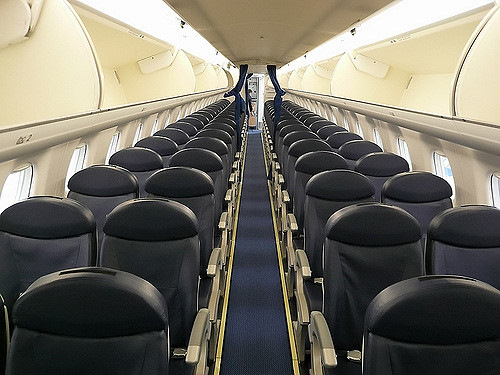


В 1999 году бразильская компания, производящая самолёты, Embraer анонсировала новое семейство двухмоторных узкофюзеляжных авиалайнеров, предназначенных для перелётов на расстояния средней дальности.
Семейство получило название E-Jet и выпускалось в 4-х модификациях: E-170, E-175, E-190, E-195. Серийное производство было запущено в 2002 году, а во флот авиакомпаний первые самолёты начали поставлять спустя 2 года.
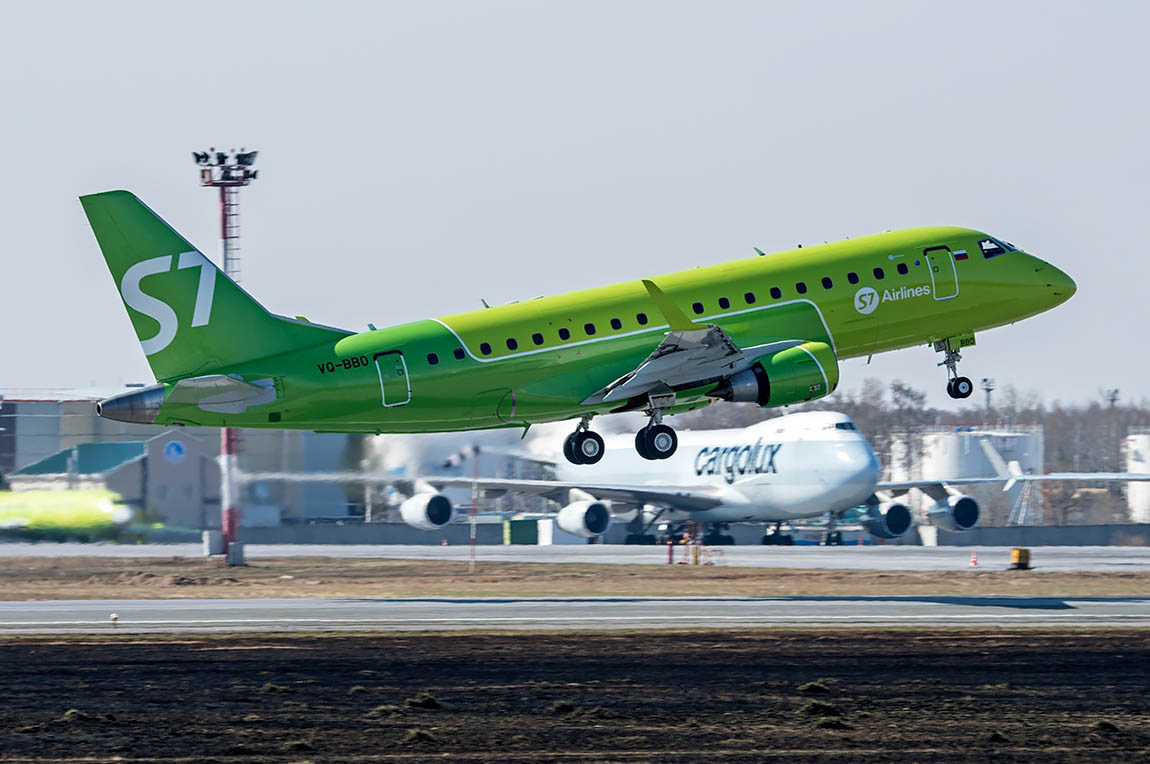
В разработке этой модели принимало участие множество фирм. General Electric поставлял турбовентиляторные двигатели CF34-8E/10E. Хвостовую часть представил Hamilton Sundstrand. За разработку авиаоники Primus Epic ответственна Honeywell. Различные части фюзеляжа предоставили Kawasaki, Latecoere, Liebherr, Gamesa, Sonaca. За гидродинамику и топливную систему поручилась Parker Hannifin.
Самолёт Embraer-170 — это базовая модификация. На её основе создавались остальные авиалайнеры этой серии. К примеру. Е-175 — более длинная версия E-170.
В 2013 году представитель авиакомпании рассказал о выпуске второго поколения этих самолётов: Е-175-Е2, E190-E2 и E195-E2.
В России Embraer 170 использует авиакомпания S7 Airlines.
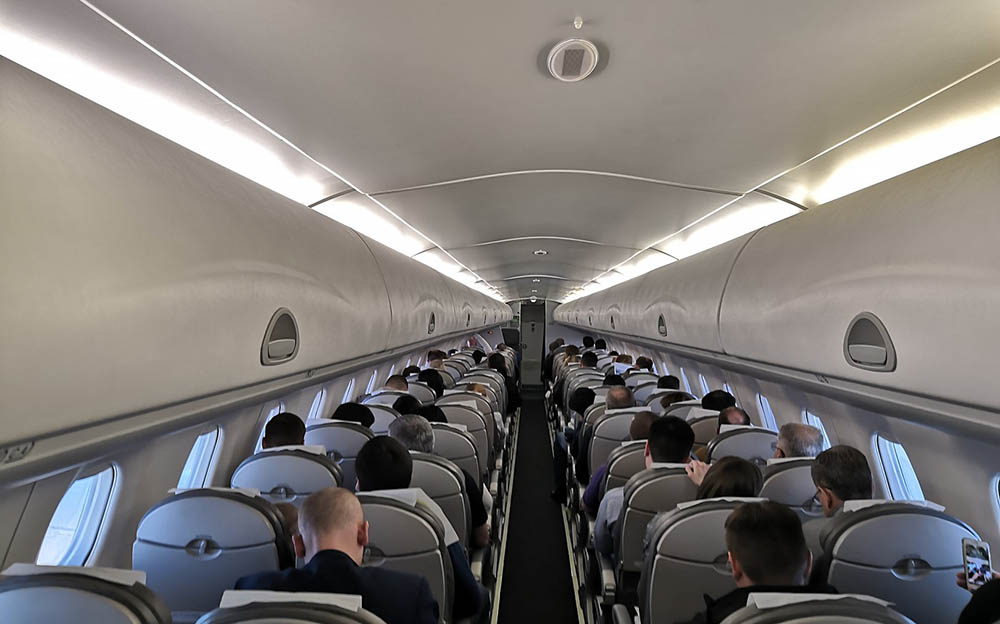
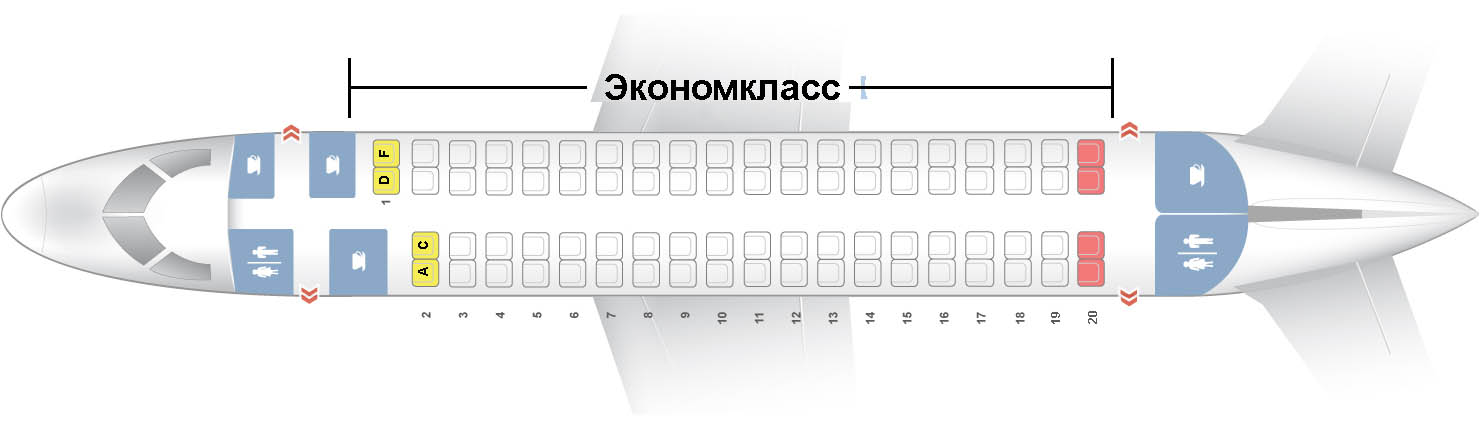
Схема салона, лучшие и менее комфортные места в самолёте Embraer 170 авиакомпании S7 Airlines
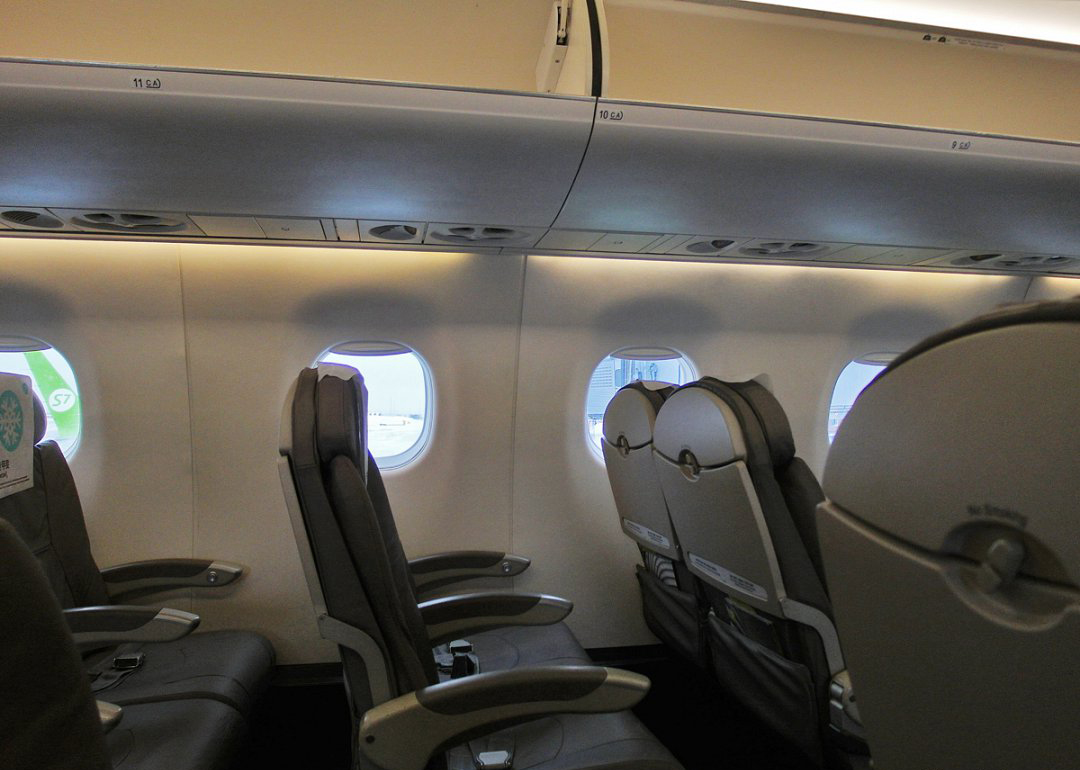
Самолёт Embraer 170 авиакомпании S7 Airlines предназначен для комфортного перелёта 78 пассажиров. У него есть только одна компоновка без разделения на экономический и бизнес-класс. Кресла расставлены по схеме 2×2.
Туристы могут попасть на этот авиалайнер при перелёте по маршрутам внутри страны. Для дальнемагистральных рейсов S7 использует более вместительные самолёты: Boeing и Airbus.
В основном, пассажиры, летящие на Embraer 170, не испытывают неудобств. Самолёт не шумный и достаточно стабильный. По словам клиентов S7, тряска не ощущается даже при заходе в плотный слой облаков.
Пассажиры часто жалуются на обивку кресел. Вертикальная опора в середине спинки может давить на спину.
В носовой части располагается кабина пилотов, туалет и два выхода. В хвосте авиалайнера — ещё два выхода и туалетная комната.
Главный плюс — настраиваемые подголовники, которые перед полётом можно отрегулировать по своему усмотрению. Кроме того, пассажиры отмечают широкий проход и весьма вместительные полки для ручной клади.
Лучшие места
- Ряд 1. Лучшие места для высоких людей. Предусмотрено дополнительное пространство для ног. Пассажиры отмечают, что это единственные места, где удобно сидеть при росте, выше 185 см. На остальных рядах весьма ограниченное пространство для ног. Кроме того во время выдачи питания, на этих местах отмечается более разнообразный выбор блюд.
- Ряд 2. Места 2А, 2С максимально комфортные. Пассажиры, летящие на данных местах получают максимальное количество свободного пространства.
- Ряд 7-13. Обычные кресла экономического класса. Однако на этих местах понижен уровень шума. Ничто не помешает вести беседу. Единственный нюанс — обзору из иллюминатора будет мешать крыло.
Худшие места
- Считается, что худшие места располагаются ближе к хвосту салона.
- Ряд 20. Максимально неудобные места. Спинки кресел не откидываются, а спешащие в туалет пассажиры могут толкать и задевать локтями. Кроме того, из санузла, при некачественной уборке, может неприятно пахнуть. При раздаче питания придётся довольствоваться тем, «что осталось». В редких случаях коробочек с питанием может не хватить.
- Ряд 19. В целом, неплохие места. Однако пассажиры, следующие в туалет, могут раздражать или даже толкать. Максимально неудобные места в этом ряду — 19С и 19D
- Ряд 13, места A и F. В целом, весьма комфортные места. Есть откидной столик, спинки кресел можно перевести в горизонтальное положение. Однако вид из иллюминаторов будет загораживать крыло. Чтобы посмотреть вниз, придётся находиться в максимально некомфортном положении.
Лётно-технические характеристики Embraer 170
- Длина: 29,9 м;
- Размах крыла: 26 м;
- Высота: 9,67 м;
- Максимальный вес: 37,2 тонны;
- Дальность — 3 900 км;
- Максимальная скорость: 890 км/ч;
- Крейсерская скорость: 870 км/ч;
- Вместимость: от 70 до 80 пассажиров;
- Количество экипажа: 2 человека.
Интересные факты о Embraer 170
- Это один из самых тихих самолётов;
- Embraer 170 — самая короткая версия в семействе;
- Главный вход в самолёт находится спереди;
- Embraer E-Jet пытались угнать 1 раз уйгурские сепаратисты в июне 2012 года.
Информация о самолете Embraer 170
Embraer 170 — это узкофюзеляжный пассажирский самолет, разработанный бразильской компанией Embraer. Он был представлен в 2002 году и начал эксплуатироваться в 2004 году. Самолет может перевозить до 78 пассажиров на расстояние до 4 260 км. Он оснащен двумя турбовинтовыми двигателями General Electric CF34-8E, которые обеспечивают скорость до 890 км/ч. Embraer 170 имеет длину 29,9 м, высоту 9,7 м и размах крыльев 26 м. Он также оснащен современной авионикой и системами безопасности, включая систему автоматического управления полетом и систему предотвращения столкновений. Embraer 170 широко используется авиакомпаниями по всему миру для региональных и среднемагистральных перевозок.
Техническая информация о Embraer 170
— Длина: 29,9 м
— Размах крыльев: 26 м
— Размеры кабины: 2,74 м x 2,74 м x 1,82 м
— Максимальная скорость: 890 км/ч
— Дальность полета: 3 704 км
— Вес: 28 120 кг
— Двигатель: два турбовентиляторных двигателя General Electric CF34-8E
— Вместимость: 70-78 пассажиров (в зависимости от конфигурации салона)
Самые удобные и безопасные места в самолёте
Как и в любом другом самолете, наиболее безопасные места в Embraer 170 находятся в задней части кабины. Это связано с тем, что при аварийной ситуации передняя часть самолета может получить большее повреждение, чем задняя. Кроме того, в задней части самолета находятся выходы для эвакуации, что позволяет быстрее и безопаснее покинуть самолет в случае необходимости.
Среди конкретных мест, которые можно считать наиболее удобными, можно выделить:
1. Ряды 12-14: эти места находятся в задней части самолета и имеют больше места для ног, чем места в передней части.
2. Места у окон: они обеспечивают лучшую видимость и позволяют избежать контакта с другими пассажирами, которые могут проходить мимо.
3. Места у выходов: они обеспечивают быстрый доступ к выходам в случае аварийной ситуации.
Важно отметить, что каждый пассажир имеет свои предпочтения и требования к месту в самолете. Некоторые предпочитают места у прохода, чтобы быстро покинуть самолет, другие — места у окон, чтобы наслаждаться видом. Поэтому выбор места в самолете — это индивидуальный выбор каждого пассажира.
Meet The Embraer 170
The Embraer 170 is a clean-sheet design derived from the extensive experience acquired from the Embraer Regional Jet family. The first member of the Embraer E-Jet series set the standards that its successors have held up.
These aircraft are sleek, light, and modern, and airlines love them. As a passenger, I appreciate having all the commodities typical of larger aircraft on short-haul flights.
The success of the Embraer E170 and its derivatives consolidated the Brazilian company as the third largest commercial aviation powerhouse in the world, behind only Airbus and Boeing. The last 191 E170s left the production line in 2017. As of March 2022, Embraer has delivered 1621 E-Jets and 52 E-Jet E2s, with another 420 on order.
Bottom Line Up Front
The Embraer E170 revolutionized short-haul travel in 2004. Embraer introduced a jet that offered the comforts of large, expensive aircraft in a compact and affordable package. The E170 only sold 191 units, but it paved the way for the hugely successful Embraer E-Jet family.

The Embraer E170 is the first member of the large E-Jet family. This aircraft is a narrow-body twin-engine airliner that nominally carries 70 passengers in a four-abreast seating configuration.
The E170 stands out from contemporary short-range airliners in passenger comfort and performance. The Brazilian jet delivers passenger and crew experience comparable to larger aircraft like the A320 or Boeing 737 families, but with operational and acquisition costs closer to smaller airliners like the older Embraer Regional Jet family.
Creating the Embraer 170
The 1990s were a fantastic era for Embraer. The Brazilian company was in its third decade of successful launches. The EMB-110 Bandeirante broke into the market in 1973, followed by the 1985 EMB-120 Brasília and the ERJ-145 in 1997.
The first Embraer jet airliner had a troubled design phase due to a series of Brazilian economic crises but beat all expectations and secured 1231 orders.
After completing the ERJ-145 design, Embraer announced in 1997 that it planned to launch an airliner capable of seating 70 passengers, hence the “70” in the project designation EMB-170.
The design started a joint venture with European manufacturers, using the ERJ-145 design as a starting point. In 1999, Embraer abandoned the initial project for an in-house, clean sheet design.
The Brazilian company officially launched the new project under the E-Jet moniker during the 1999 Paris Air Show at Le Bourget. Embraer initially planned two variants, the ERJ-170 and the ERJ-190. The new aircraft attracted 70 firm orders during its debut, 40 for the ERJ-170 and 30 for the ERJ-190.
The ERJ-145 underwent multiple redesigns and mock-ups until its final form, but the design and prototyping for the E170 went by quickly. A year after the first order, Embraer had begun tooling for building prototypes and serial aircraft.
The E170 rolled off the production line in October 2001 and made its first flight in February 2002. By that time, Embraer had begun full-scale production in São José dos Campos, concurrent with flight testing.
Eager to capitalize on this momentum, the company introduced an intermediary variant named E175. Its prototype first flew in 2003. The E170 and E175 enjoy 95% of parts commonality.
While Embraer was rushing to hand over the E170 to clients, the flight testing and certification process took longer than expected. The type only received its FAA, EASA, and ANAC ratings in February 2004.
In March, the first E170 batch reached its customers. The E170 made its debut with LOT Polish Airlines on March 17th, and an introduction in Alitalia and MidAtlantic Airways followed shortly.
See also: Embraer Legacy 500 Guide and Specs
Design Features

The aerodynamic arrangement of the Embraer E170 is comparable to that of the Boeing 737 and Airbus A320 families, with low-mounted swept wings, two podded high-bypass turbofan engines, and a conventional empennage.
The Brazilian short-haul jet has a wingspan of 85 ft 2 in, with blended winglets fitted on the tips to improve performance and fuel consumption. The wings are swept to attain cruise speeds above Mach 0.75, a design target set forth by airlines, and have an aspect ratio of 9.3.
The outboard wing panel carries four vortilons on its underside to improve control over the boundary layer on top of the wing. The total length of the Embraer E170 is 98 ft 1 in, with a tail height of 32 ft 3 in. The fuselage has a diameter of 9 ft 7 in.
The maximum takeoff weight (MTOW) of the Embraer E170 is 85098 lbs.
The fuel tanks can carry up to 3071 gallons and a payload of 21479 lbs. The baggage compartment fits 503 cubic feet. The aircraft has a maximum landing weight of 73413 lbs. Thanks to the single-point refueling system, the E170 fuel tanks require 10 minutes to replenish fully.
Embraer selected a pair of General Electric CF-34-8E high-bypass turbofan engines to power the E170. Each engine outputs 14500 lbf at sea level, with a thrust-to-weight ratio of 5.6:1. In standard cruise conditions, the E170 achieves fuel consumption of 0.68 nautical miles per gallon.
The CF34-8E has four low-pressure stages and two high-pressure ones. This powerplant is also present in the Embraer E175, and both have full authority digital engine control (FADEC).
The Embraer E170 cockpit inherited the unique M-shaped yoke first introduced in the EMB-120 Brasília in the 1980s. The grip angle and shape are very comfortable to handle on longer flights compared to the Boeing-style controls.
The throttle console has two FMS (flight management system) interfaces for flight planning and navigation. The flight deck has a Honeywell Primus Epic avionics suite. The glass cockpit has two multifunctional screens per crew member, plus a central console.
Like most modern Embraer aircraft, elevators and rudder control come from a digital fly-by-wire system similar to the Airbus A320 family. The ailerons use conventional control linkages. The elevators use an all-moving trim system. The wings on the Embraer E170 have multiple aerodynamic devices.
There are five spoiler panels on each wing, two of which are used exclusively during landing to shorten the landing run. Slats cover the leading edge, while the trailing edge contains double-slotted flaps split into two sections.
German Swiss company Liebherr provides the tricycle landing gear on the Embraer E170. All three landing gear legs have two wheels. Their main landing gear wheels sit exposed when retracted, with no door covering them.
The deicing system on the Embraer E170 uses bleed air from the engines, except for the electric windshield heating.
The passenger cabin is 6 ft 7 in tall, 9 ft wide, and 63 ft 6 in wide. The E170 typically has four 18” wide seats in each row, with 31” of pitch on the left side and 29” on the right.
Most airliners have USB or AC sockets in the seats, and some have onboard Wi-Fi available. The interiors come from C&D Aerospace, continuing a collaboration that began with the Embraer Regional Jet family.
Thanks to the double bubble fuselage, the Embraer E170 has more room around the shoulders, legs, and overhead bins than most regional airliners. The front and end of the cabin contain a galley and a lavatory.
Embraer 170 / Prices
Towards the end of the Embraer E170 production run, each airliner cost approximately $41 million. This price varied slightly based on the options requested by airlines, but most of the E170 have a nearly identical configuration.
Embraer 170 / Performance and Handling

Based on consultations with airlines, Embraer designed the E170 aiming for a cruise speed of around Mach 0.75. The E170 and E175 reach that number at their service ceiling of 41000 ft, while the larger E190 and E195 attain Mach 0.78. The stretched variants have aerodynamic improvements and more powerful engines to compensate for the higher weight.
All Embraer E-Jet family members have a maximum cruise speed of Mach 0.82, a limit set by their aerodynamic configuration. With a complete passenger load aircraft and enough fuel for 500 nautical miles plus standard reserves, the Embraer E170 takes 16 minutes to reach 35000 ft.
At sea level and in standard atmospheric conditions, the E170 needs 5190 ft for takeoff. An Embraer E170AR with a full load requires 5394 ft of runway. This number is considerably better than the heavier E175, which uses 7362 ft.
For shorter flights up to 500 nautical miles, all Embraer E170 variants need only 3776 ft to take off. The difference is a lot smaller for landing. The Embraer E170 at maximum landing weight needs 4029 ft, compared to 4072 ft for the E170AR and 4137 ft for the stretched E175.
The E170LR has a maximum range of 2100 nautical miles at maximum takeoff weight. In the Embraer E170AR, this number grows to 2150 nautical miles. Both figures include standard typical mission reserves.
Most friends who have transitioned away from the Embraer E170 say they miss it after flying the Airbus A320 and Boeing 737. Embraer excelled at making the cockpit modern and comfortable, and the aircraft possesses benign handling characteristics.
Many crewmembers also lauded the ease of transition from the ERJ series as far as cockpit flows go.
Embraer 170 / Modifications and Upgrades
Embraer 170STD
The Embraer 170STD, or E170, is the standard version of the airliner.
Embraer 170LR
The Embraer E170LR (Long Range) contains an additional fuel tank fitted in the baggage compartment to expand the range.
Embraer 170AR
The Embraer E170AR (Advanced Range) increased the MTOW from 82012 lbs to 85098 lbs, while the maximum landing weight grew from 72312 lbs to 73414 lbs. The main advantage of the E170AR is its higher payload. While the E170LR can carry 19848 lbs, the E170AR can take 21480 lbs. Both models have the same fuel capacity.
Embraer 175 Family

The E175 first came along as the ERJ-170-200. It adds a 5 ft 10 in extension to the fuselage, which increased the maximum seating to 86 seats. Like with the E170, the stretched variant has both Long Range and Advanced Range versions available besides the standard ones. The first E175 passenger flight happened in 2005, a year after the E170.
Despite being a derivative of the E170, the E175 found more commercial success over time. According to data Embraer published in March 2022, the E170 had 191 orders, compared to 840 for the E175. The E175 order backlog grew in July 2022 due to more deals struck during aviation salons.
The Embraer E175 has 95% parts commonality with the E170, though starting in 2014, the Brazilian company changed the winglets to a more angled design.
While Embraer closed the E170 chapter in 2017, the Brazilian company carried the E175 design into its new E-Jet E2 line. In February 2022, with no orders for the type, Embraer planned to pause the E175-E2 program for three years.
This development is a stark contrast to the E190-E2 and E195-E2, with 266 firm orders. The fortunes of the E175-E2 changed in July 2022, when Alaska Airlines ordered eight aircraft.
Embraer 170 / Where to Find Replacement Parts
Finding spare parts and maintenance for the Embraer E170 is a breeze. The original member of the E-Jet series shares up to 95% of its components with the E175. The stretched variant of the airliner attained 848 orders halfway through 2022.
The popularity of the E-Jet worldwide has led to a deep network of service and logistic centers. According to the 2017 Reference Guide by Embraer Commercial Aviation, Embraer has six of its service centers, eight authorized service centers, and dozens of independent third-party centers that work with the E-Jet family.
All owned and authorized service centers work with the E170, except for Austral, HNA, and Hawker Pacific.
The Brazilian manufacturer runs the Embraer Pool Program, a maintenance plan covering over 50 airlines. The component pool agreement takes part of the logistical burden away from airliners.
Members of the Embraer Pool Program leave the stockpiling of parts up to Embraer, who then supplies them to the end customer based on their needs. Being on the Embraer Pool Program relieves pressure from the airlines while giving them more flexibility in case of surges or dips in demand.
Embraer 170 / Common Problems

Like most commercial airliners, the Embraer 170 experienced some growing pains early in its career. The E170 was the first Embraer airliner to have a considerable presence in mainline carriers. Until then, the Brazilian company had worked primarily with regionals, which typically have a much different structure.
While smaller carriers felt comfortable following Embraer maintenance procedures to the letter, major airlines with organic engineering departments often tried to modify certain aspects of service.
I have heard airline staff complain about the initial Embraer E170 maintenance manual being too vague, but this aspect has changed since its introduction.
Pilots that transitioned from other aircraft found an amusing quirk with the Embraer E-Jet computer logic. When holding, the crew sometimes engages the parking brakes for convenience.
In the E170 and other E-Jet family members, activating the parking brakes tells the computer that the aircraft has arrived at the gate and prepares it for post-flight checks.
This reset is inaccessible from the cockpit, so the unfortunate crews that found this out the hard way had to call on maintenance to rush to the aircraft and reset the computer before departure.
The digitalized component monitoring system on the Embraer E170 is a blessing for maintenance, but it is somewhat cumbersome. Each part tracked by the aircraft’s computer, no matter how minor, must be identified after a replacement. In practice, this system means changing something like a valve requires a software update.
Environmental control in the E170 is not as refined as it could be. The temperature in the cabin jumps from cold to very warm instead of a smooth transition.
Embraer 170 / Resale Value
As a popular young airliner with good reliability, the Embraer E170 does not last long in the market. Brokers such as Airstream are constantly moving Embraer 170 airframes between airlines.
According to Aviacion Online, Airstream advertised an Embraer E170-100LR in March 2022 for $8,560,000 on behalf of Satena SA. This airframe reached its first operator in 2006.
Embraer 170 / Similar Aircraft

At its introduction, the Embraer E170 competed primarily with the Bombardier CRJ700. The success of the Brazilian airliner inspired other manufacturers to make their entries in the market. In 2011, Russian manufacturer Sukhoi introduced the Superjet 100 with Armavia. The biggest threat to the E-Jet family came in 2016 with the Airbus A220.
The Bombardier CRJ700 entered service in 2001 as an evolution of the smaller CRJ100 series. The direct competitors to the Embraer E170 are the CRJ700 with 66 to 78 seats and the CRJ900 with 76 to 90 seats.
The CRJ700 uses the same CF34 engine family that powers the E170. The performance is comparable to the Embraer, with a cruise speed of Mach 0.78 and a maximum speed of Mach 0.82 at the service ceiling of 41000 ft.
The main drawback of the CRJ700 series is the range, with a maximum of 1550 nautical miles for the long-range CRJ900 variant.
After Embraer beat the CRJ700 family, Bombardier hit back with the CSeries. The new airliner flew in 2013 and changed its name to Airbus A220 after the Canadian company hit financial problems. The A220-100 carries between 100 and 120 passengers in standard seating arrangements. The jet became operational in 2016 with airBaltic.
The A220 uses an aerodynamic configuration similar to the Embraer E170 and has a pair of Pratt & Whitney PW1500G engines in underwing pods.
These engines allow the A220 to achieve the same cruise speeds and service ceiling as the E170 but with much better fuel consumption. The result is almost twice the range and lower operating costs.
Embraer responded to the A220 with the E-Jet E2 family, using the same family of engines to achieve similarly impressive results. However, even the E190-E2 falls slightly short of the A220 in range.
The other main modern competitor to the Embraer E170 is the Sukhoi Superjet 100. The Russian airliner entered service in 2011, but after a promising start, the SSJ100 failed to have the desired impact despite good sales in the domestic market.
Aeroflot is the top operator, with 54 Superjet 100s flying as of 2020. Outside of Russia, only three airlines still operate the aircraft.
FAQs
Question: Is the Embraer 170 a Good Plane?
Answer: Yes. The Embraer 170 has good passenger comfort, low fuel consumption, and a modern cockpit and cabin design.
Question: What is the Difference Between the Embraer E170 and E175?
Answer: The Embraer E175 is a stretched version of the E170, with a slightly higher passenger capacity.
Question: How much is an Embraer E170 per Hour?
Answer: According to Aircraft Cost Calculator, the Embraer E170 costs around $4712.58 per hour, assuming 450 hours flown in a year.
Question: Does Embraer Still make the E170?
Answer: No. Embraer E170 ended in 2017, but the larger versions of the E-Jet family are still in production as of 2022.
Question: How many Seats does an Embraer 170 Have?
Answer: The Embraer E170 has a typical seating capacity of 66 seats in a dual-class layout and up to 78 in a single class.
Recommended Reads:
- Boeing 747 Guide and Specs
- Boeing 777 Guide and Specs
- Boeing 757 Guide and Specs: Does It Live Up to the Legacy?
- Best Aviation Sunglasses Guide
- Embraer 195 Guide and Specs: The Biggest Brazil Has to Offer
- Airbus A350 Guide and Specs: A Dose of Xtra
References:
- https://www.key.aero/article/embraers-20-years-continued-success-e-jet
- https://www.embraercommercialaviation.com/commercial-jets/e170/
- http://airsoc.com/articles/view/id/55020f41313944bb048b4569/flashback-friday-13-years-of-the-embraer-e-jet-family
- https://skybrary.aero/aircraft/e170
- https://aerocorner.com/aircraft/embraer-170/
- https://www.aerolopa.com/aa-embraer-170
- https://www.aviacionline.com/2022/03/colombia-satenas-embraer-e170-for-sale/
- About
- Latest Posts
Jamie comes from a long line of military and civilian pilots! His brother, father, and grandfather are all pilots. Jamie’s partner also works in aviation as a mechanical engineer. This means in his day-to-day, he lives and breathes all things aviation. Over the years, Jamie has gained an incredible amount of knowledge and hopes to start his PPL as soon as his degree is finished. In the meantime, Jamie passes all of his knowledge about flying, planes, and flight simulators on to the readers at Aviator Insider.